HIIT: What Still Works in 2026
By Answer Fitness editorial ·
HIIT still works in 2026. It is one of the fastest ways to raise aerobic fitness (VO2 max) if the hard parts are actually hard. It is not a fat-loss cheat code, not a replacement for lifting, and not something you should do every day.
The 2017 version of this page sold “less cardio, more results.” The decade since mostly agreed on the first half. Fat loss still comes from a calorie gap you can live with. HIIT’s real job is time-efficient conditioning.
What HIIT is (and is not)
High-intensity interval training alternates a hard effort with easier recovery. “Hard” means you could not hold a conversation. It does not mean you vomited. It does not mean every cardio session of your life, and it does not mean a 45-minute burpee class with a playlist.
Three labels get mixed together:
- HIIT — repeats of 20 seconds to 4 minutes near the top of what you can sustain, with rest that lets you hit the next round.
- SIT (sprint intervals) — 10–30 seconds all-out, then a long easy spin. Shorter, nastier, easy to overdo.
- Steady / Zone 2 — you can talk in sentences. This is still aerobic work, not a failed HIIT session.
If you can narrate the “hard” round, it is not high intensity. If you cannot stand up after round two, you started too hot.
What the last few years actually showed
- HIIT usually beats easy steady cardio per minute for VO2 max. Stretch the easy work long enough and both improve fitness. HIIT is the shorter road, not the only road.
- A 2026 dose-response analysis found most of the VO2 max gain from a HIIT session shows up in a surprisingly short hard block — on the order of 10–15 minutes of true interval work, not an hour of fake intensity. Extra all-out rounds are often fatigue, not fitness.
- Two HIIT sessions a week is plenty for someone who already lifts. Three can work if you recover. Four-plus plus heavy squats is how people quit or get hurt.
- When calories are matched, HIIT and steady cardio lose fat at about the same rate. The win is that HIIT is shorter, so some people stick to it. The loss is that wrecked legs skip the next lifting day.
- Easy aerobic minutes still earn a place. They recover faster and support the bar. Do not delete them because a class called them “junk miles.”
How hard is “hard”?
You do not need a lab. Use one of these:
- Talk test. Hard = broken words, not a speech. Easy = full sentences.
- Heart rate. Hard is roughly 85–95% of estimated max (220 minus age is crude; use it as a lane, not a law). Easy drops enough that breathing settles.
- RPE. Hard is 8–9 out of 10. Recovery is 3–4. If every round is a 10, you will sandbag round six.
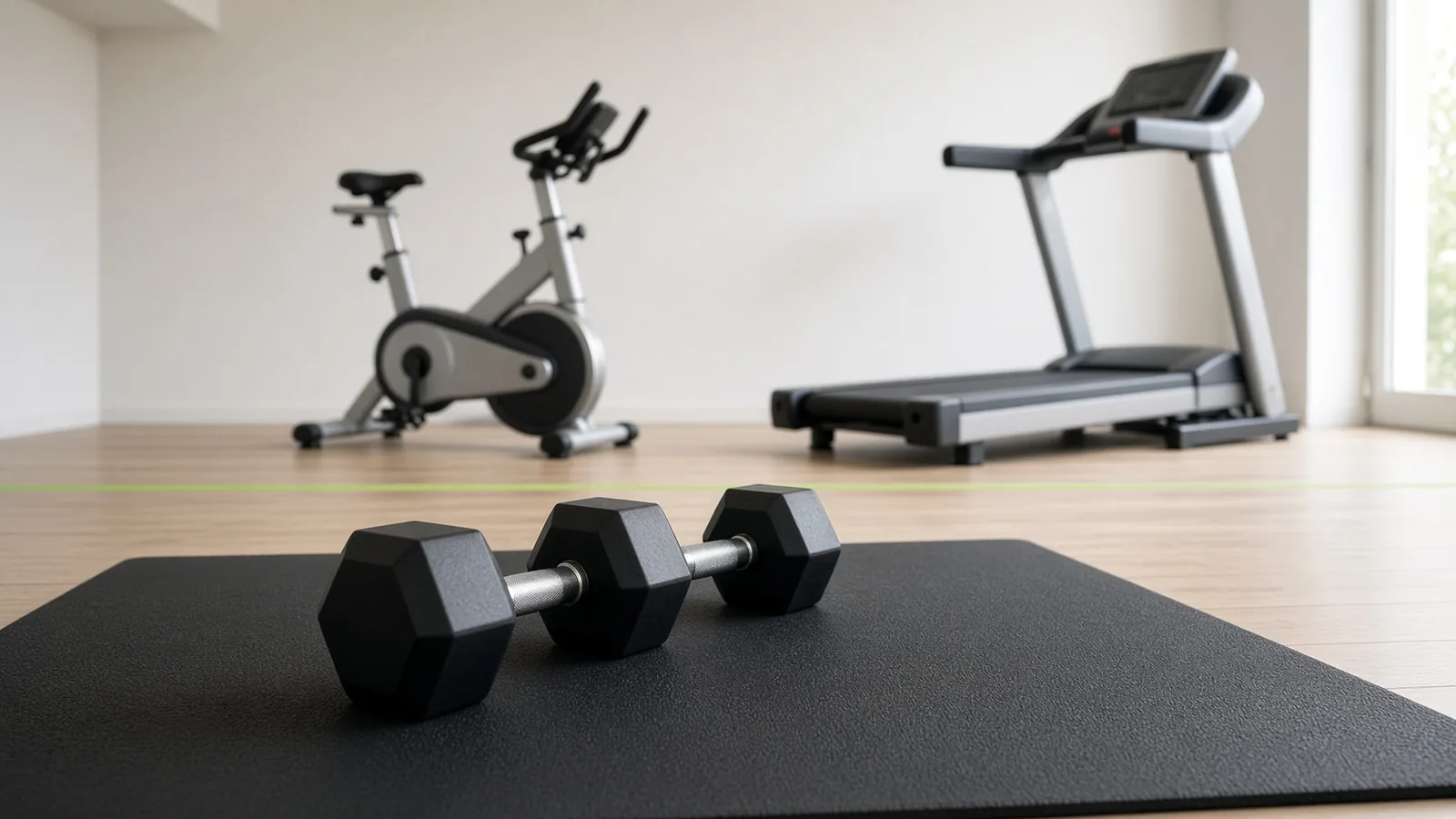
Bike, rower, ski-erg, hill sprints, and an air bike are the cleanest tools: you can go hard without slamming joints into the floor. Running intervals are fine if your tendons already like running. Jumping-jack-and-burpee “HIIT” is often just a noisy circuit. It can raise your heart rate. It also trashes the next squat.
Protocols that are enough
Warm up 5 minutes easy, same machine you will use. See the same idea as a lifting warm-up: get warm, then ramp, then work.
Beginner (one session a week to start)
6–8 rounds of 30 seconds hard / 90 seconds easy. Total work about 15–20 minutes including the easy bits. If the last two rounds are slower than the first two, you started too fast. Stay here for a month.
Default for lifters (one or two sessions a week)
8 rounds of 40 seconds hard / 80 seconds easy on a bike or rower. Or 10 × 1 minute hard / 1 minute easy if you prefer a clock that does not need thinking. Stop while quality is still there.
VO2 block (when conditioning is the goal)
The well-studied Norwegian-style session: 4 × 4 minutes hard (hard but controlled, not a sprint) with 3 minutes easy between. Do this at most twice a week, not on the day after a heavy lower-body session. Two to three weeks of this, then back to the shorter default. You do not live in 4×4 forever.
Sprint intervals (optional, not a personality)
6–10 × 15–20 seconds all-out, 90–120 seconds easy. Useful when you are short on time and already trained. Useless as a daily habit. Skip this if you are new, hypertensive, or still learning to pace.
Where it sits in the week
Lift first if both happen in one visit. Tired legs under a bar is a worse trade than a slightly slower interval. Keep HIIT off your heaviest squat or hinge day if you can. Pair it with an upper day, a rest-from-barbells day, or the morning after an easy walk day.
A week that does not wreck the lifting:
- Mon — full-body or beginner plan
- Tue — 25–40 minutes easy bike or walk (you can talk)
- Wed — full body
- Thu — intervals, 15–25 minutes of work, then go home
- Fri — full body, or upper/lower if you train four days
- Weekend — walk. That is enough conditioning for a desk job and a barbell habit.
If you teach a HIIT class for a living, you are not the audience — you already have a huge aerobic base and a recovery problem. If you sit all day and lift three times a week, one hard interval session is plenty. Two is the ceiling until sleep and barbell numbers are both moving.
Related: how often to work out and recovery as part of the plan.
Fat loss, calories, and the afterburn story
HIIT burns more per minute than an easy walk. It does not burn a magic pile of calories after you shower. The “afterburn” (EPOC) is real and small. Do not eat a smoothie because a watch said 700. A normal interval session is in the same neighborhood as other hard cardio — see what a lifting hour actually burns. The scale still moves at the table.
Use HIIT because you want to be fitter in 20 minutes, not because you want to punish dinner.
Mistakes that made HIIT look like a fad
- Doing “HIIT” at a chatting pace, five days a week, and wondering why nothing changed.
- Burpee-only sessions that trash the next squat and call it cardio.
- Stacking a HIIT class on top of a hard lifting day, then skipping the next lift.
- Using intervals to erase a big dinner. The math still happens at the table.
- Skipping easy work entirely. The aerobic base is what lets you recover between hard days.
- Chasing a new protocol every week. Pick one, run it 6–8 weeks, then judge.
Who should get clearance first
People with known heart disease, uncontrolled blood pressure, fainting, chest pain, or who get dizzy under load need a clinician’s go-ahead before all-out intervals. Pregnancy, returning from injury, and anyone new to exercise should start with the beginner 30/90 and walking, not sprints. Hard is relative. Your hard should still look like controlled work, not an emergency.
Stop the session if form falls apart, or you feel chest pain, wheeze, or dizziness — get that checked, do not “push through.” Soreness the next day is normal; see DOMS. Pain that changes how you walk is not.
Strength still does the muscle-building. HIIT does the engine. The four principles do not change because a bike is involved.
Updated September 2026. Not medical advice.
Questions people ask
- How often should I do HIIT?
- If you already lift, one or two hard interval sessions a week is enough. Three can work if you recover. Daily HIIT plus heavy squats is how people quit or get hurt.
- Does HIIT burn more fat than steady cardio?
- When calories are matched, fat loss is similar. HIIT is shorter per minute of fitness. The scale still moves at the table.
- What is a simple HIIT workout?
- Warm up five minutes, then 8 rounds of 40 seconds hard and 80 seconds easy on a bike or rower. Hard means you cannot hold a conversation.