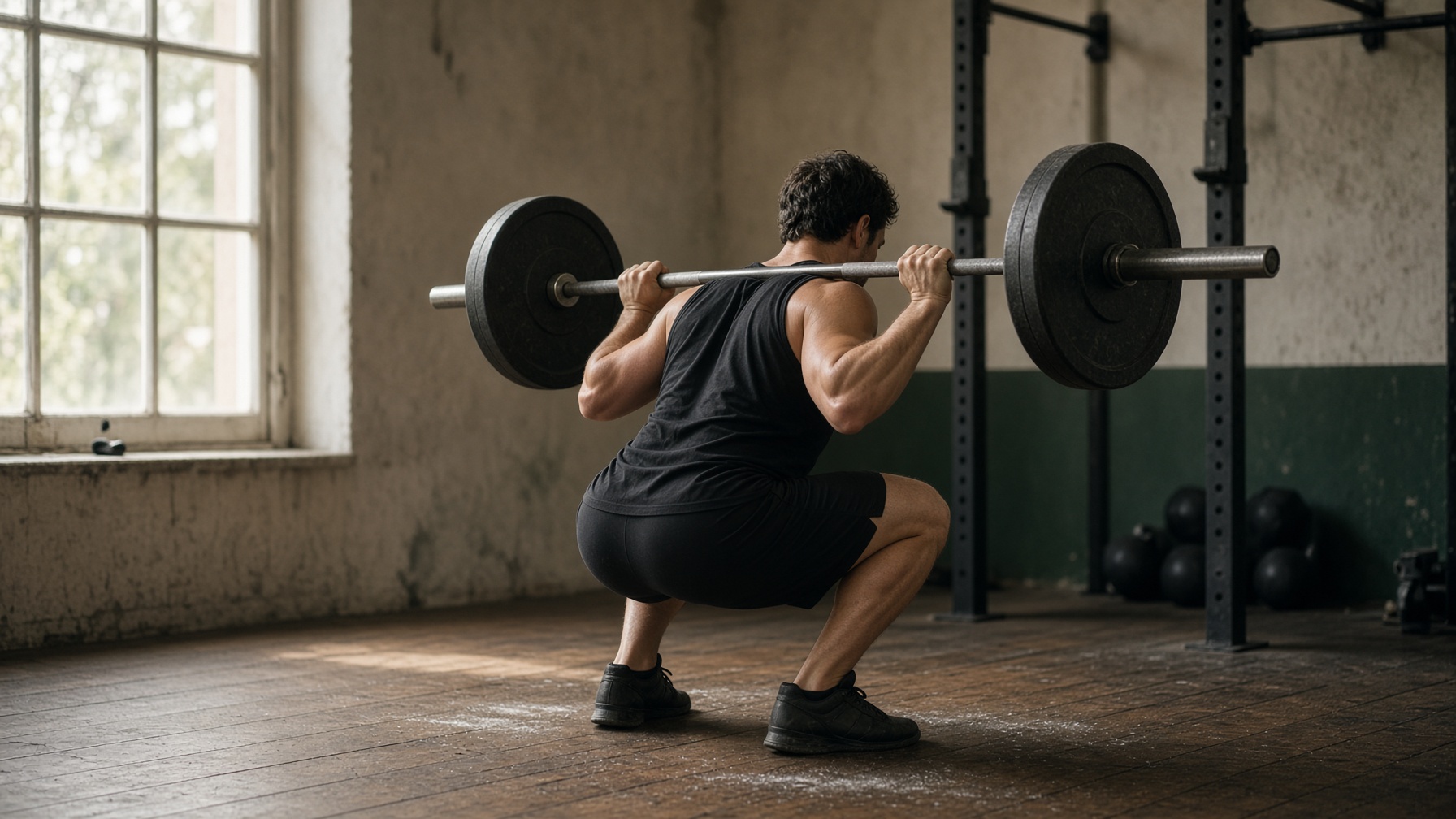
Full Body Workout Plan
By Answer Fitness editorial ·
Why full body still wins
Most people do not need a six-day bro split. If you can get to the gym two to four times a week, a full-body plan hits every major pattern each session, leaves 48 hours before you repeat it, and still builds muscle and strength. That was true in 2017. The evidence has only gotten clearer.
You get more practice on the big lifts. You get a larger weekly stimulus without living in the gym. And you do not strand a muscle group for a week if life knocks out Thursday.
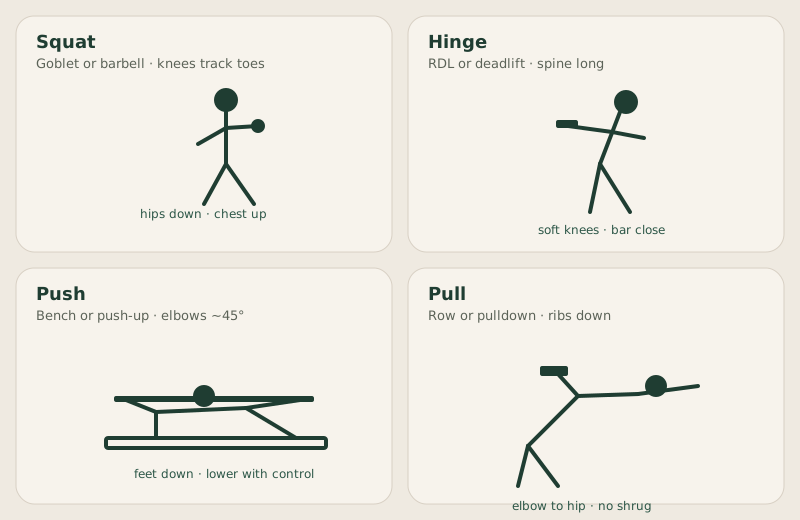
This is the Answer Fitness full-body plan, rewritten for 2026: three sessions, about 45–70 minutes, built around squat, hinge, push, pull, and a little extra work for arms and calves.
Who this is for
- Beginners through solid intermediates who want one program, not a spreadsheet cult.
- People who can train 2–4 days per week. Three is the sweet spot.
- Anyone who would rather leave the gym than scroll their phone between sets.
If you are coming back from injury, pregnant, or managing a medical condition, get a clinician or qualified coach to sign off before you load a barbell. This is training advice, not medical advice.
The rules that make it work
1. Train the pattern, not the gadget
Every session includes a squat or lunge, a hinge (deadlift or RDL), a horizontal or vertical push, and a pull. Machines are fine if free weights feel unstable. See free weights vs machines.
2. Progressive overload
When you can hit the top of the rep range with two reps in reserve, add a little load next time — 2.5–5 lb on upper body, 5–10 lb on lower. If the gym plates jump too far, add a rep instead. That is overload.
3. Leave 1–3 reps in the tank
Most working sets should feel like a 7–9 out of 10. Grinding every set to failure is a fast way to trash your next session. Save true failure for the last set of isolation work if you want it.
4. Rest like it matters
Compounds: 2–3 minutes. Isolation: 60–90 seconds. You are here to lift, not to drip sweat for its own sake. Recovery between sessions is covered in rest and recovery.
How often
Three days a week — Monday / Wednesday / Friday, or Tuesday / Thursday / Saturday — is the default. Two days still works if you run Day 1 and Day 2 and let Day 3 wait. Four days is possible if you keep volume honest and sleep.
You do not need to train a muscle once it is no longer sore. Soreness is a poor scoreboard. DOMS can show up after a new exercise and then fade as you adapt.
The weekly template
Warm up 5–8 minutes: easy bike or walk, then two light sets of the first lift. Then:
Day 1
- Goblet or barbell squat — 3 sets of 6–10
- Romanian deadlift — 3 sets of 6–10
- Bench press or push-up — 3 sets of 6–10
- Chest-supported row or cable row — 3 sets of 8–12
- Overhead press — 2 sets of 6–10
- Curl + triceps extension superset — 2 sets of 10–15
- Calf raise — 2 sets of 10–15
Day 2
- Trap-bar or conventional deadlift — 3 sets of 4–8
- Split squat or walking lunge — 3 sets of 8–12/side
- Lat pulldown or pull-up — 3 sets of 6–10
- Incline press or dumbbell press — 3 sets of 8–12
- Hip thrust or back extension — 2 sets of 8–12
- Face pull or rear-delt raise — 2 sets of 12–20
- Plank or hanging knee raise — 2 hard sets
Day 3
- Leg press or squat (lighter than Day 1) — 3 sets of 8–12
- Hip hinge (dumbbell RDL or cable pull-through) — 3 sets of 8–12
- Dip or machine chest press — 3 sets of 6–12
- One-arm row — 3 sets of 8–12/side
- Lateral raise — 2 sets of 12–20
- Curl + triceps — 2 sets of 10–15
- Carry (farmer or suitcase) — 2–3 trips of 20–40 meters
Cardio around this
Two to three easy Zone 2 sessions of 20–40 minutes (walk, bike, row) will help conditioning without eating the lifts. Add HIIT once a week at most if you like it, not on the day after deadlifts if you can avoid it.
What to eat so this works
You cannot out-program a huge deficit or a protein-free diet. For muscle, most lifters do well at about 1.6–2.2 g of protein per kilogram of body weight per day. A modest calorie surplus builds faster; a modest deficit still lets beginners gain some muscle. Details: protein, carbs, and fat and how many calories to lose fat.
Progress for 12 weeks, then change one thing
Run this as written for 8–12 weeks. Add load or reps. Sleep. Then swap a variation (front squat for goblet, pull-up for pulldown) rather than throwing the whole plan out. That is specificity plus progression.
If you stall for two weeks, drop a set on the accessories, check sleep, and look at the scale and the log — not your mood after one bad session.
A two-day version is the 2-day full-body workout. To compare that week with upper/lower or push/pull/legs, read full body vs upper/lower vs push pull legs.
Questions people ask
- Is a full-body workout enough?
- Yes for most people. Three sessions a week that hit squat, hinge, push, and pull will get you stronger for years if you progress the load.